

Coaching: The Essentials You Need to Know
Coaching has become increasingly familiar in Vietnam, but not everyone understands its approach, how it works or what the process involves.
Unverified videos and people misusing the term on social media have even created negative impressions of coaching.
What is coaching and how does it work? Explore the answers with Me&We.
WHAT IS COACHING?
The International Coaching Federation (ICF) defines coaching as:
‘Partnering with clients in a creative, thought-provoking process that inspires them to maximise personal and professional potential. Coaching often unlocks previously untapped imagination, productivity and leadership.’
Everyone has goals, challenges and times of feeling stuck. Working with a coach can change your life and lead towards greater personal and professional success.
Simply put, coaching means:
Helping a person change in the way they want and move in their chosen direction.
Supporting a person at every level in becoming who they wish to be.
Increasing awareness and empowering individuals to make changes and choices.
THE ORIGINS OF COACHING
Coaching appeared in the early nineteenth century when Oxford University used ‘coach’ for a tutor or instructor. Around 1860 it entered sport to describe trainers of teams or athletes, still its most familiar meaning today.
In The Inner Game of Tennis, published in 1974, Timothy Gallwey argued that improving performance was not simply about technique and practice.
He observed tennis players creating mental barriers by doubting abilities and imagining failure. Negative thinking interfered with the mind’s natural functioning and limited success.
Gallwey considered understanding an athlete’s life, behaviour and character more important than merely training technical or physical skills. Every game, he explained, has an outer and an inner part.
The outer game is competition with an opponent.
The inner game involves self-doubt, low confidence, distraction and anxiety.
Gallwey described two selves:
Self 1 is the mind—the analytical, worrying self.
Self 2 is the body—the intuitive, physical self.
Self 1 instructs and Self 2 acts. The inner game involves letting go of Self 1’s criticism so Self 2, the subconscious, can take the lead.
HOW COACHING WORKS
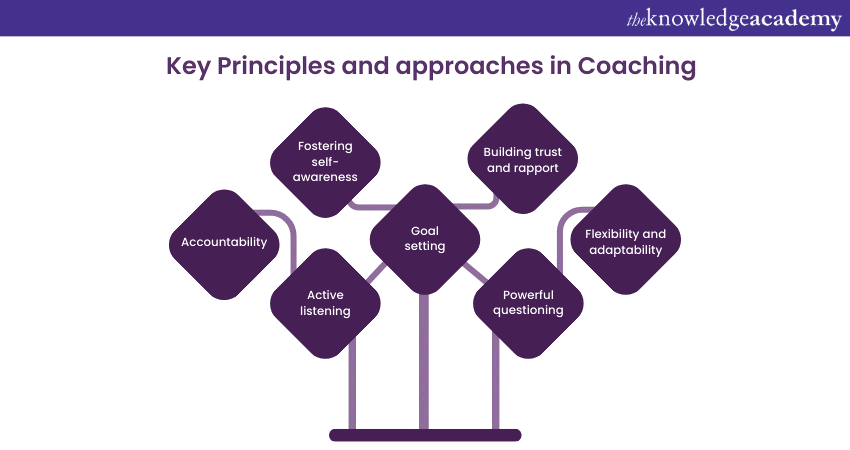
Coaching rests on the belief that each of us already has the answers we need. Coaches help find those inner answers through questioning, active listening, observation and feedback.
These techniques increase awareness and often create previously unavailable insights. An impartial, non-judgemental listener who helps you focus provides space to understand how to move forward and grow.
Some coaches use NLP—Neuro-Linguistic Programming—while others use meditation or journalling. Various models, such as GROW, can be used, and some take a more flexible or intuitive approach.
Coaching commonly focuses on goals. After sessions, you are encouraged to list actions so you know which steps to take towards them.
WHAT DOES THE COACHING PROCESS INVOLVE?
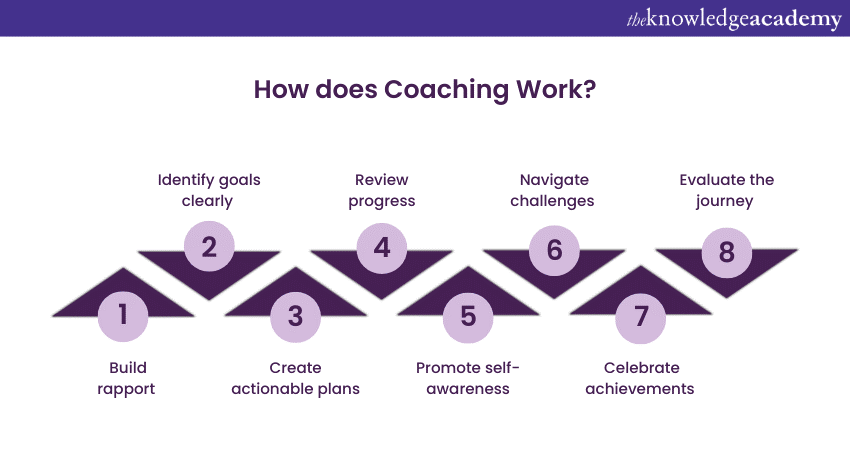
Sessions between client and coach typically last at least 60 minutes. Meetings may occur once or twice weekly, or once monthly, entirely according to need. Both parties agree what suits the client before starting and remain flexible if schedules require adjustment.
During the first one or two sessions, coaches usually explore goals and what clients hope to achieve.
Unclear goals are fine. Coaches ask questions and listen to what you say—and do not say—to identify what truly matters. Active listening and questions drawing on subconscious awareness uncover deep wishes and clarify suitable goals.
Once goals are established, coaches help determine your current position and the necessary steps towards your desired destination, bridging the gap between present and desired states.
At each session’s end, clients commit to tasks before the next meeting, often called homework. These are specific actions both parties identify as the most important steps towards larger goals.
Commitment focuses you on essential tasks and provides accountability to support consistent follow-through. Commitment, accountability and follow-up are among coaching’s most valuable elements and explain why clients often make more progress than alone.
THE BENEFITS OF COACHING
Whatever your goals, making time and space for personal or professional development can improve confidence and self-worth.
If lost or uncertain, coaching provides clarity, direction and focus.
If seeking change, coaching increases awareness and helps understand and change behaviours.
If motivation or realising career and life goals is difficult, coaching helps identify purpose and take responsibility for achieving it.
If learning a skill, whether sport or emotional management, coaching can accelerate progress.

For more benefits, read Eight Signs You May Need a Coach Alongside You.
Coaching depends on commitment to the process and an open, honest relationship. Its focus on continuous development, potential and personal goals explains why many call it life-changing.
LIFE COACHING AT ME&WE
Me&We’s strongly solution-focused services encourage new strategies in thought and action. We also explore root causes and address their past origins to make transformation more effective. We support people in reaching deep dreams and wishes and moving beyond barriers.
We help you see clearly and act from a clear state of mind, using internationally recognised techniques and tools. Support includes self-understanding, managing emotions and removing negative feelings, meaningful relationships, and setting and achieving goals.
Our services are not designed merely to help you feel a little better: changing lives is our goal. We offer no predetermined route or prepared script. Our map comes from your own stories and experiences.
If interested in life coaching with Me&We, begin here.